Welcome! Author, motivational speaker, educator and licensed belief therapist Jane Harber is available to speak to, or conduct seminars for, your group or function. Contact Jane here to schedule.

Wednesday, September 22, 2010

The Biblical View of Grief & Depression

Xulon Press
Xulon Press
Even today, many years after the initial writing of "One Foot on a Banana Peel," medical professionals are still "discussing" the difference (and IF there even is one) between grief and depression. "How long should a patient be 'allowed' to grieve before it is considered to be a depressive episode?" "Should the grieving person be medicated, or not?" (Click here to read one blog on this subject. There are many others out there.) While this subject seems to be on the "hot seat" in today's psychological blogs, I have yet to see anyone writing about how the Bible views the topic.

The Bible uses the word grief in a much broader sense than solely intense personal sadness. “To the Hebrew writers, the importance of grief was not its psychological effect upon the individual. Grief was important to them because it is a response to the troubles of a fallen world.” (Nelson’s Illustrated Bible Dictionary, copyright 1986, Thomas Nelson Publishers, pg. 446) The Lord Himself grieved over the sinfulness of His human creation. Ezekiel was groaning with broken heart and bitter grief as a prophetic sign of impending judgment. Isaiah’s grief (in Isaiah 17: 10, 11) was over those who had forgotten who God is. And grief, the Bible says, is the normal response to the trouble caused by one’s enemies. 

Sin is another Biblical cause for grief. Luke, chapter 15 tells the story about a prodigal son. Through this example, we see that physical death is not the only form of death.  Personalities can “die.” Have you ever seen a child whose personality changed drastically, maybe due to the use of drugs or alcohol? It may have even seemed like it happened almost overnight! Pre-marital sex can have the same strong reaction, especially in a young teen who has not yet developed the emotional capability to handle emotional responsibility. This is basically the same thing that happened to the young man. (Luke 15: 11-32) Obviously this young son was not dead physically. But who he was, his whole personality, his spirit and soul, had literally “died” because of his sin. This is what happened to Adam and Eve in the Garden of Eden, and it’s what happens to each one of us when we sin. Our own personal sin causes us deeply felt grief, and sin in our lives causes “death,” which means we are separated from God. This death, this spiritual separation from God, causes grief.

Another reason for Biblical grief is when we grieve for others. Jesus wept. Not for Himself, but for those who should have known Him, but didn’t. Paul had “great sorrow and unceasing grief in his heart” for his brethren in the flesh who had not become his brethren in the Spirit. A pastor once told me that the majority of prayer requests he receives are concerning health issues. Paul had a desire and “burden” for the salvation of others … what happened to ours? Where did it go?

Job’s three friends grieved and mourned so much at what they saw, that they sat with him for seven days and nights in silence before they even spoke. Their heartache at seeing their friend suffer so, caused them to look for answers to fix the situation. They were barking up the wrong tree, obviously. But they kept grasping at whatever straw that entered their mind anyway, trying to find reasons for Job’s afflictions so that somehow the situation could be remedied. Who among us hasn’t done so? 

Esther was one whose grief for others was deeply felt.  Her story is told in the Book of Esther. Esther’s king was about to destroy the Jews, her people. Esther grieved over this, but she had a big problem. It seems the king had the power and authority to either dismiss her, or have her killed if she interfered or intervened in any way. Yet, her grief for her people would not be assuaged. So, her grief for her people caused her to put her life on the line for them.  She fasted first, and then went to see the king. By the grace of God, Esther found favor before the king, and was able to save her people from his decree. While we know it was an act of God’s mercy, it was through Esther’s grief and prayers for her people that they were saved.

On a more positive note, one more Biblical perspective on causes for grief, is that of “longing.” In this context, the longing is for God … longing to know Him better, in a deeper, more intimate manner than we ever have before. Longing to be filled with His Spirit, and have our thirst for Him quenched. Longing to know His Word and His ways.  We see David’s obvious heart for knowing the Lord, His ways and His word, in Psalm 119. David seeks to know the Lord.  With all of his heart, his mind and his body, he desires to know and walk in the ways of the Lord. Verse 20 finds David’s soul “crushed with longing” after the ordinances of the Lord. Verse 25 reveals that David’s soul “cleaves to the dust,” and he asks the Lord to revive him according to His word. Verse 28 states that David’s “soul weeps with grief,” and he asks God to strengthen him. David also zealously seeks after the salvation of the Lord, and he waits on the Lord to fulfill that desire. His soul “fails with longing” for the word of the Lord. All of that takes place in verses 81 and 82.

It's important to know how God sees grief.  In this day and age, we are inundated with sound and visuals from the entertainment industry which indicate how people react to trauma and tragedy. Once this "picture" is in our minds, far too many of us come to believe it.  And then when negative circumstances invade our own lives, we react in much the same manner.  We need something far more stable than the entertainment industry to lean on when trauma and tragedy hits us hard. We need strength from God and guidance from His Word.


Tuesday, September 14, 2010

Mentoring a Troubled Teen

For more info, click here
I've worked with troubled teens at a Texas Youth Commission boot camp. In part, I was responsible for a team of over 100 volunteers who provided recreational, educational, spiritual and financial services for the boys who were residents there. One thing I found lacking in these youth was a healthy, balanced sense of value and worth. A balanced sense of self esteem, including being accountable for their actions (as we all must be) as well as understanding and believing that their lives had value and worth just because they are living, breathing human beings, is essential.  This is especially true because many of them were entrenched in negative thinking patterns and corrupt life styles.

Many of these youths' eyes would pop open when I would tell them that they are valuable and that their lives have meaning and purpose. No one had ever told them stuff like that before. Now, you're not going to get all of them ... one in particular pointed out to me that he couldn't wait to get to prison because his dad told him how much fun it was! Come on, kid ... you're smarter than that!!!

One program I ran for these youth was a Mentor program. My team of volunteers was the absolute best! And their work on behalf of these boys was nothing short of outstanding, whichever program they were presenting! But the mentor program stood high on the list for effectiveness. Nothing can replace that one-on-one relationship where both mentor and mentee are learning together and from each other. The wisdom and experience that came from the mentor was a guiding light for these young boys. 

Added to this point, I found that many of the volunteers who had "been there, done that," were even more effective in working with them. They understood the life, and were able to express their ways and means of getting out of that lifestyle and putting their feet on a more healthy, productive life pathway. They could really help these kids in a way that they could relate to and grasp hold of. 

I know your lives are busy, and full of stress. But if you can find the time, become a volunteer. I recommend becoming a mentor to a youth who needs your attention, knowledge and experience. Care. Do it today!

Jane Harber, author
"Quit Digging! A Lifeline of Hope for Troubled Teens"


Monday, September 6, 2010

Finding Truth

Wherever books are sold
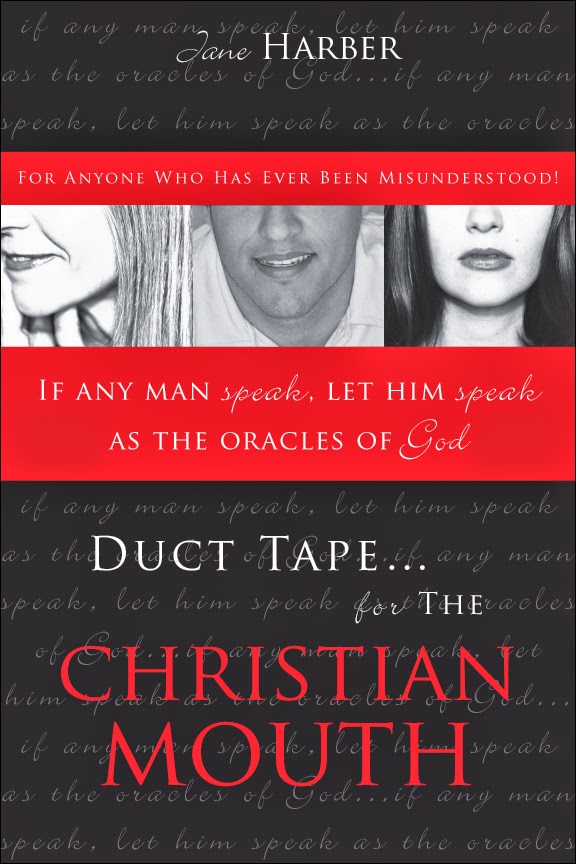
I’ve had trouble with my tongue for a long time.  Ever since way back, it just won’t behave! (Ok, so those of you who have known me since back then, you’re nodding your heads and have great big smiles on your faces right about now!)  More often than not, I have walked around with not only one, but with both feet stuck right smack-dab in the middle of my mouth.  At times I’ve felt as if I’m the only one who understands what I’m saying, like nobody understands my language.  Adding fuel to the “fire,” it seems that once we’ve been misunderstood a time or two, our next efforts at communication tend to overcompensate for that.  We try hard not to be misunderstood again.  But somehow, through the extensive verbiage that comes out of our mouths in an effort not to be misunderstood, we dig the hole even deeper.  The more words we speak, the deeper the hole gets.  Ever been there?  Of course you have.  Trust me … I understand!

If you’re in a hole, quit digging!  I’ve told God before that my mouth was just too far out of control, and I didn’t want to talk any more.  The least He could do was give me some duct tape for my mouth!  But thank God, He didn’t answer that prayer.  He had better things in store for me.  He didn’t want to shut my mouth, He wanted to heal it!  He wanted to give me something better than duct tape … He wanted to give me truth.
Truth can drastically change the words of our mouths.  Speaking words of truth can even miraculously change the course of our very lives.  No, I’m not talking about the kind of truth that says unkind things, like, “Honey, your new hairdo is ugly,” or “Man, you did a terrible job!”  While statements like that may sometimes be the truth, they are not spoken with love that’s meant to teach, encourage, uplift and edify the one spoken to.
What I’m talking about here is learning and growing … replacing the misunderstandings, misconceptions, deceptions and lies that we have all fallen prey to and believed, with truth.  Why?  Because truth will set us free!

God wants us to know truth.  He has given us the means to examine our patterns and ways of thinking, so that we can weed out what’s wrong and replace it with truth.  The healing we come to know in learning truth can then lead to the restoration of not only ourselves, but also our relationships that have been tainted by misunderstandings.  The end result will lead us on to functioning together, as we were created to do, as one Body … the Body of Christ.

Monday, August 30, 2010

My Hero

Tate Publishers
Tate Publishers
I love King David. Next to Jesus, David is my favorite Biblical character. He’s the one I want to see next after Jesus when I get to Heaven. He’s the one whose hand I want to shake. I want to tell King David how much his life has touched my own. You see, I relate to David’s writings in the Psalms. Friends relate to Job, Peter … you may relate to a different Biblical character. I relate to David.

David is my hero. He was a man after God’s own heart. David had an awesome relationship with God, and because of that relationship he had faith enough to slay a bear, a lion and a nine-foot-tall giant. It is said that David was a very young man when he accomplished these tasks, probably in his early teens. Yet he knew who he was, and Whose he was. He was a shepherd at the time he slew Goliath. He tended to the few sheep his father owned. Still, he knew in Whose army he fought; “… for who is this uncircumcised Philistine, that he should defy the armies of the living God?” (I Samuel 17: 26) David was well aware that no power could defeat his God. “Thou comest to me with a sword and with a spear and with a shield: but I come to thee in the name of the Lord of hosts, the God of the armies of Israel, whom thou has defied.” (I Samuel 17: 45) Then he picked up five smooth stones, and with one of them, he slew the giant who caused the whole of Samuel’s armies to tremble in fear.

Yet as close as David was to the heart of God, he still made mistakes. Some of those mistakes were serious, and horrendous consequences followed them. Throughout the course of his lifetime, whether by fault or by persecution David had many times and instances of intense trepidation, causing him to cry out to God in great distress. He wasn’t afraid or ashamed to voice his concerns to God, either. Yet somehow, somewhere deep inside of him, David knew. He knew who God was. He knew God’s power and majesty. He knew God’s might. When he cried out to God, his grievances never had a period (.) at the end of them. They always had a comma (,). The end of the sentence (prayer, i.e. psalm) never came until after David acknowledged who God is. David’s heart felt pain, and even death. He struggled much of the time while he was walking through his “valley of the shadow of death.” However through it all, he always ended his cries by acknowledging God’s presence, as well as His authority, in any given situation that he happened to be experiencing at the time. David knew … the Lord is God!

David struggled, as have I. In my own life, I, too, have cried out to God with heartfelt tears. I’ve known David’s tears and I’ve known David’s fears. I’ve known his defeats and his victories. I relate to David. And like David, I’ve also known the majesty, power and authority of God’s mighty presence in my life. Again like David, I can say, “Oh God, Thou are my God.” It’s in recognizing who God is, and His presence, power and authority to sustain us as we walk through the “valley of the shadow of death,” that times of refreshing come. It’s in acknowledging God’s life within us, that life comes to us.


Tuesday, August 24, 2010

Hope for Recovery


Xulon Press
Xulon Press
I’m a licensed belief therapist, an author and speaker. All that came about because of a long bout with grief. There were 11 deaths of immediate family members in a short span of time, at the time I wrote my first book, “One Foot on a Banana Peel.” But there were also things happening in LIFE that took my breath away. Those were even more difficult, and could have destroyed me and my family. I found several interesting things during the time of research for this work. I was startled to find out how many people were suffering from grief and/or depression. Sooooo many! Another thing I was surprised at was that many believed that grief and depression are two totally separate entities. It was said that grief is only suffered at the death of a loved one. This is just not true, and it’s not Biblical either. I do realize that there can be a clinical depression that is deeper than “normal” (whatever “normal" is these days), but one thing I found out about this total separation between the two was that people were not able to connect with HOPE, or a recovery, because they didn’t know what it was they were dealing with! Knowing what the problem is, is half the battle … right? There IS hope! And there can be recovery! I’m living proof!

Saturday, August 21, 2010

Step Away From the "Best Sellers"!

When going to a book store or looking on Amazon.com, take a moment and step away from the "Best Sellers". Why? You may be overlooking some really good books by beginning authors. It is very difficult to break through the pack and become a "best selling" author when there are one million book titles produced each year in the United States.

Many of the books making the list are there, not for the content of the book, but for the popularity of the author. Unless an author is a celebrity, many readers will not give a book a second look. While they may be great books, there are other books out there to look at.

If you area an avid reader, take the time to go to book fairs and book stores and make it a point to meet the authors at their booth. Many of them have great personal stories of how their book(s) came to be published. These beginning authors will devote time to converse with you. They will be happy to sign your book purchases also.

After reading the book you have purchased, please do not forget to review it on one of the major book sites on the internet. Barnesandnoble.com, goodreads.com, amazon.com and others are a good choice. If you really would like to be an encouragement, send an email or note to the author. Encouragement goes a long way. After all, you are the reason writers write.

God bless you.

Thursday, August 19, 2010

Spiritual and Emotional Healing

Tate Publishing
Tate Publishing
One day as I was driving in my car, the Lord showed me a picture in my mind's eye. The picture was of me, standing there in my spiritual armor. There I was ... fully "dressed." I had on the helmet of salvation. My loins were girt about with truth. I had on the breastplate of righteousness. My feet were shod with the gospel of peace. I had the shield of faith in my left hand, and the sword of the Spirit in my right. I was decked out to the max!

It's the shield of faith that I'd like to tell you about here. At that time, I noticed two things about my shield. One was that it was full of arrows. God's enemy and ours, Satan, had thrown many "arrows" my way. This shield ... faith ... stopped them from reaching me. I was grateful beyond words to my Lord for this wonderful gift of faith.


The second thing I noticed was not so good. That shield, as wonderful as it was, was very small. At that point in time, I didn't give this detail a second thought. I just went about my business and drove to wherever it was I was going.


However, in later years the Holy Spirit brought this vision back to my memory. Specifically, He caused me to focus on the size of that shield. I began to think that perhaps there were MORE arrows shot my way. Maybe some had gotten past the shield because it was so small. Maybe it didn't catch all of them. I wondered about all the arrows that had gotten past that small shield ... where did they all go?


What's the purpose of a shield? Where is it located on our bodies and what does it protect? Well, we carry it ... therefore it resides in our hands. When an arrow is shot at us, we protect the vital parts of our bodies with this shield ... our head (mind) and chest (heart). Those arrows that made it past that shield had lodged themselves in my MIND and in my EMOTIONS!


Once I realized this truth, the Holy Spirit reminded me of the Scripture that talks about removing the log from our own eye so we can help remove the speck that is in our brother's eye. (Luke 6: 42) For a split second in time, I wondered what that Scripture had to do with arrows shot past a shield. Then the "light" came on ... and I knew. Just as we must remove the log from our eye, so it is that we must remove the arrows from our mind and emotions! When we get a splinter in our finger, it must be removed. If it's not removed, it stays under the skin and eventually begins to fester. The same thing happens with those wiles of the enemy that have been shot at us and get past our shield of faith. Those arrows "fester" in our minds and in our emotions. In order for our minds and emotions to be healed, they must be removed!


Those are my thoughts. What are yours?